BlackWomenWork

Our Stories. In Multitudes.

  • Stories
  • Gallery
  • About
  • Contact Us
Antoinette Chukudebelu.jpg

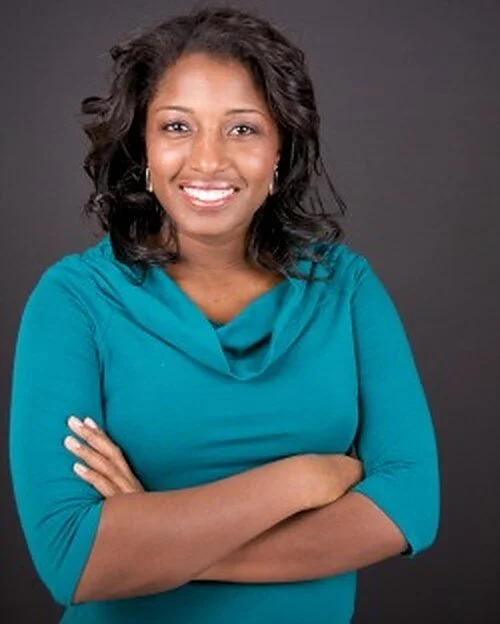
Antoinette Chukudebelu, People and Talent Maximizer

April 30, 2020 by Pier Duncan in Education, People Management, Higher Education

Hi, Antoinette! What do you do and how would you describe it to someone unfamiliar with your space? 

I’m the Managing Director of Talent at Relay Graduate School of Education. My primary job is to think thoughtfully about our people. I think about how they perform in their jobs, how they can do them better and how we can keep them here. I think about their development, and how we’re engaging them as an institution and ensuring we’re considering diversity, equity, and inclusion in all aspects of our work. I also think about how home office operations — how the organization runs, how it functions, how it’s in the service of our mission — works for our people so that they feel supported and satisfied. 

That’s such a wonderful way to view people management. How would you describe your career path? 

I would trace it back to being a kid. As a child, I just liked people. I’m naturally someone who is more of an extrovert and I can connect with people across a variety of backgrounds. I always refer back to those experiences as my first opportunities for leadership and being around a lot of different types of people. I played soccer and gymnastics, and was the captain of those teams, and those were also valuable experiences where I learned so much about leadership. 

I started my career as a kindergarten teacher and that fostered my love for learning and education. I stayed in teaching for six years before thinking about how I might support my peers, and ultimately transferring over to a role where I could support other teachers. When I first came to Relay, I started as an assistant professor of practice — essentially, teaching how to be a great teacher. But I realized that wasn’t what got me super excited. I actually really liked learning more about the people I work with and bringing them on board, getting them integrated into the organization. And so that is when I transitioned over to talent. I believe every strong talent leader should be a recruiter because you’re only as strong as your network and the people in it. So I was a recruiter, and then I went back to my roots to focus on teaching and learning, focusing on professional development, staff performance, organizational culture, DEI, and home office operations. 

How would you describe your typical mindset as you move through your work? 

It’s very “We the People.” My job is to be the voice of the people and listen when it comes to engagement and culture, and bring those revelations to light for the executive team. I would say, similarly, when it comes to assessing the performance and development of staff, I’m always trying to think of what’s best for the people and the institution. And I believe people make the institution. I also try to maintain a growth mindset. We all have opportunities to grow and to learn, and you have to keep that mindset each and every day when you’re in a role that works to develop people.

What’s most fulfilling to you? 

I get an opportunity to see these glimpses of people being very successful in their role, and taking something they learn in a professional development session and applying it and feeling really happy. I feel good about the work I’ve done when I see people fulfilled in their roles. I’ve had very meaningful conversations with managers and institutional leaders who really like where they are and choose to be here. And you want people to choose to be in their roles. I want people to feel they have a choice and they choose Relay. 

What are some experiences that have informed who you are as a professional?

Leadership is something I have started to study -- what makes leaders, characteristics of leaders, why some leaders stand out. In sports, I learned that you have the opportunity to control your own game. You decide your own destiny. How much you practice can inform how you perform. I’ve applied those individual lessons to work and to life. Also, my mom is a quieter personality, and I learned from her what it means to be humble which is just an important quality for any leader in any space.  

I feel like there’s a common theme that keeps coming up, which is this sense of agency. Why is agency so important? 

People need to feel free, to feel liberated, and to have a sense of destiny. In order to feel that way, they can’t feel forced into doing something. When it comes to something as important as our mission — ensuring every child has a good teacher — our students should want to be that and work toward it on a daily basis. 

Are there any experiences where you’re better or stronger for having gone through it?

I’m probably going through that period right now. (laughs) I have a lot going on. I’ve had three babies in three years and I’ve had some health scares. I’m in a place where I could be down and out. But I choose to have hope, and optimism, and empathy, and gratitude. These things have helped me overcome so many hardships. I make the best of what I’m given. I’m not the kind of personality that shies away from tough situations. 

What makes you uniquely suited to do what you do?

My ability to relate to people. People are capable of learning and improving, and that brings resilience. Everyone has their own story that people don’t know. In a role that focuses on people, you know lots of stories and things that others may not. You have to value every story, because it’s very special when people trust you in that way. 

Any parting advice for those who are interested in your field?

My advice for black women, generally, is to know and learn about yourself. Take time to know yourself and take time to advocate for yourself. That means knowing your worth, and making sure that you find supportive people who will help you practice speaking up for yourself so you can do it in jobs and other places. I think we know that many systems weren’t built for black people, especially black women. It takes a lot of knowledge to navigate in these spaces. We don’t inherently have the knowledge that others are walking in with, especially in leadership positions. But you should know that whatever you want to do, you can do that with determination, hard work and support. I’m still learning on a daily basis and it’s critical for the field of talent management, and developing people.


Please share this post with a friend, and follow us at @BlackWomenWorkIG!
April 30, 2020 /Pier Duncan
Education, People Management, Higher Education
AliaMcCantsFamily.jpg

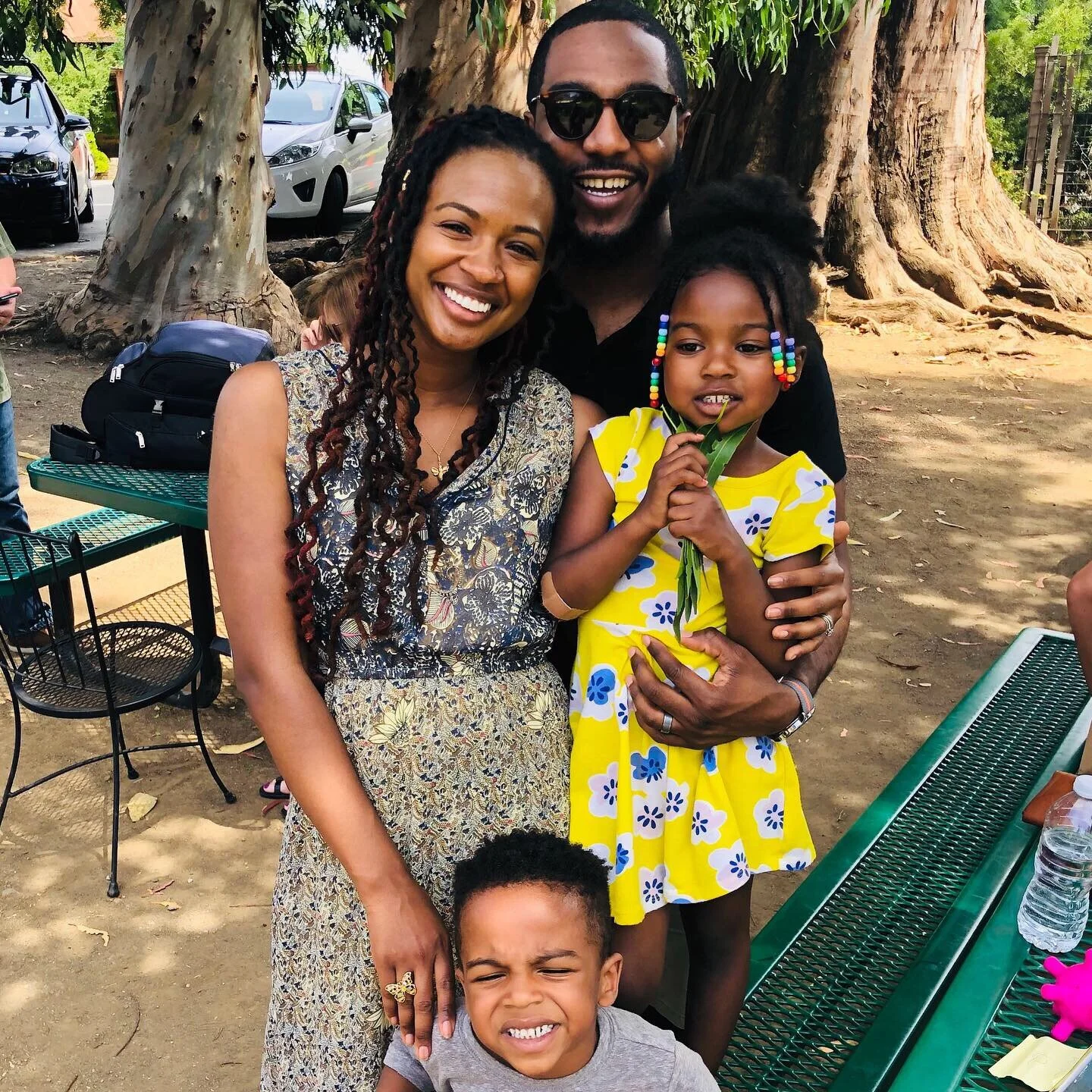
Alia McCants, Higher Education Administrator

December 16, 2019 by Pier Duncan in Education, Change Management, People Management

Thanks for speaking with me, Alia! Can you share what you do? 

I lead all prospective student recruitment at Relay Graduate School of Education. So from the first touchpoint at recruitment through team entry and enrollment, I’m responsible for those teams. I’ve been in this role for one month. Before that I was leading the recruitment team and learning  for prospective students. I’ve held multiple positions here at Relay if you want to discuss that...

Yes, please, let’s do it! How would you describe your path? 

Interesting? (laughs) I’m a curious person and I joined Relay when we were growing really quickly. There were a lot of opportunities to learn and step into new functions. When I was fresh out of grad school, I considered myself more of a skilled generalist -- solving problems and developing systems to sustain those solutions. I started working on a leadership program and then alumni affairs work for a couple years. But then I moved to strategic projects functioning in a way that was almost like an internal consultant, ascertaining what was needed and setting metrics to determine whether or not  to launch new campuses. I led our strategic planning process to produce and solidify our first-ever three-year plan. 

When I first started at Relay, I had been close to the students. When I moved to more executive work -- with high responsibility, high visibility, high-profile stakeholders -- I didn’t feel as connected to students. So I pivoted to lead the recruitment team so I got to connect with our students to inspire them and encourage them to become teachers. That was satisfying work. 

I’m also in a position where I have to align a lot of pieces of our model. For example, we have a couple different teams that grew up as silos, and so now I’m working with those teams to break down those silos. So that’s kind of been my trajectory. 

What is the biggest challenge of what you do? 

Change management. It’s all about having a clear vision, understanding the people involved, and giving them an opportunity to honor the work they have done, grieve the loss of work that they now must share or pass onto someone else, and understand the new opportunity before them. I also manage a really diverse team of people. I share an identity with some people, and some I don’t. So I focus on making sure I’m leveraging the diversity of our team so all voices can be heard, and so that we are creating an inclusive culture at the organization. I’m modeling these behaviors and practices so they can model for their own teams. 

When I left my role leading our internal and external work for our DEI strategic plan, the leadership changed and that body looks very different now. From my current role, I still work with that team. There are a lot of white women who have done a lot of work to be mindful of their privilege and biases, and we’re all working as a team to evolve and grow. But I think it  will be a challenge to determine the best way I use my voice in that space and continuing to be mindful of how I show up. It feels different than it did before. I’m also mindful of the fact that this is how it is now, and we do have a diverse bench of emerging leaders coming up. 

It’s interesting, this dynamic you bring up of supporting existing leadership while also cultivating a new generation. How has that experience been? 

It’s exciting. It keeps my brain busy. I feel very responsible for my teams, for their success, for their happiness. I know I am responsible for a wide swath of Relay’s work, and I feel that responsibility. That means continually thinking about the people, reflecting on how I show up, asking a lot of questions -- I ask so many questions! I’m always checking for their understanding and my own understanding. So it requires a lot of coordination. I find that work deeply satisfying. I like people feeling satisfied and successful in their roles. That’s one of the best parts of my job. 

What you’ve described seems as though it requires a balance of harder, more technical skills, and softer, people management skills. What is it like to have to use both of those skill sets? 

I’ve had the benefit of having really good experiences that have prepared me. Whether business school with more formal management training or as an informal learner at Relay as I learned how to lead our change management sitting in a variety of different roles since being here. I think that I’m really committed to people, and just having empathy. I hope I can lean on both sets of experiences for future success.  

It’s also important to have a sense of what I don’t know. In any organization, a solid change management approach requires having little to no ego. Our mission is what is most important, so if I have trash idea, I want you to tell me. I honestly feel like I have the best team to come up  with the best answers, and so it’s about just being comfortable with letting others step in and learning from them. 

I also think my position gives me insight into what all of our teams are doing. So I understand the bigger picture but that doesn’t make me an expert. People are experts in their own experiences so it’s important to know what you are and are not able to bring to the table.

How would you describe your leadership style?

Quirky. I think I present as a quirky person. I was an “awkward Black girl” before there was representation of us on screen. (laughs) I think if you ask my team, they’d say I’m a good big-picture thinker who can understand a vision and connect seemingly disparate pieces of information. I think I pair that with a servant-leadership mindset. I see my leadership style in support of my teams. I clear the hurdles so that they can do the work they want to do and do it well. Management and leadership are very different. Who I am as a leader is someone who is focused on building team culture, setting a vision, and remaining humble. 

Is there an early moment in your career or education that still influences you today? 

I find myself referring a lot to how I felt at Spelman where I attended undergrad. I definitely benefited from learning and growing as a human being, outside of  the identity markers that others used to define me up to that point. People see you as a Black woman, but at Spelman everyone was a Black woman, and they were all smart! I try to reference that experience when I describe to people how I want others to feel at work. I want my colleagues to be able to bring their whole identity and not worry about how others might define them. My experience at Spelman gives me the confidence to show up as myself in all spaces because my understanding of who I am came from within, and was developed outside of the white gaze, the male gaze. 

That is such an incredible insight. What are you most excited about the future? 

So many things. I’m excited my kids are going into kindergarten, and at a traditional public school. I’m excited to have school-aged kids -- I’m very excited for that. I’m also petrified by the journey. (laughs)

I’m also excited to show my kids what it’s like to be a mom who is working at a mission-oriented organization. I just taught them about the Freedom Riders and Diane Nash, who really bent the arc of history in a way that I admire. I want to show my kids that if you care about something so much and believe in it, then you work really hard for it and get good at it. I’m hopeful that my future can have that kind of impact. I really enjoy my work, my team, the people, and so I hope the future contains deeper relationships. We’ve done some really good work that we can build on and smooth out.

And I’m excited to relax and take some trips, spend more anniversaries with my husband, have our dinner together at night. Nothing fancy. But those are the things I’m excited about.

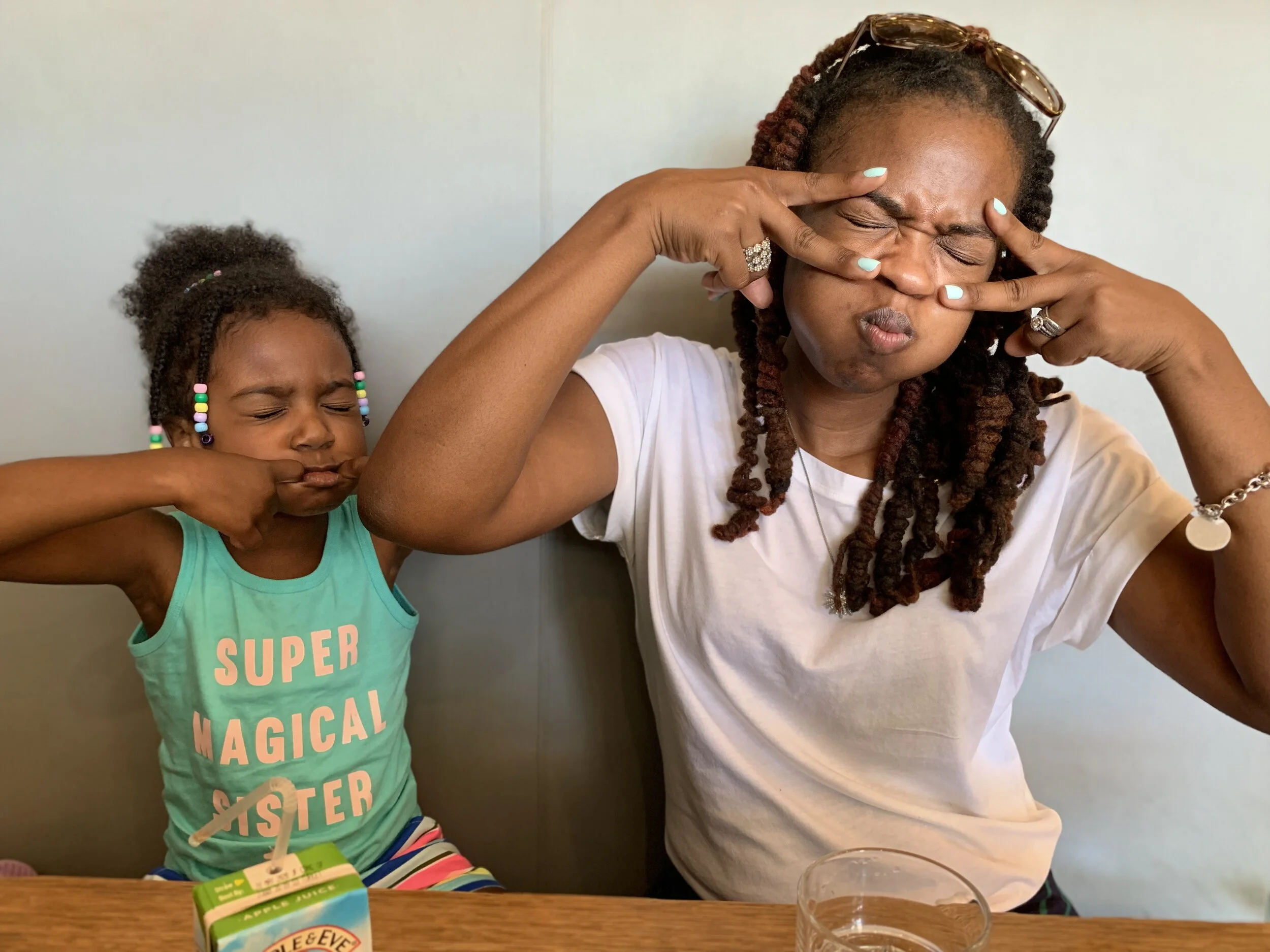
AliaMcCantsandDaughter.jpg

Please share this post with a friend, and follow us at @BlackWomenWorkIG!
December 16, 2019 /Pier Duncan
Higher Education, Change Management, People Management
Education, Change Management, People Management
Comment

Powered by Squarespace